China’s oil separator market has expanded with demand from factories, ports, vehicle workshops, food plants, and wastewater facilities. This article introduces China’s Top 10 Oil Separator Manufacturers and explains how they differ in design, production, and service.
The list should not rely on factory size alone. A reliable comparison examines separation efficiency, flow capacity, tank materials, coalescing media, maintenance access, and testing records. It also considers practical details, such as whether a separator can handle muddy water, temperature changes, or sudden oil loads. Small design choices matter. A poorly fitted gasket can cause leakage. An undersized unit can quickly lose performance.
Separation Of Oil is not simply a matter of placing a tank between two pipes. It depends on droplet size, density difference, residence time, and operating conditions. As water-treatment specialist Dr. James K. Edzwald has stated, “Effective treatment begins with understanding the water being treated.” That principle applies directly to industrial oil separation.
Each manufacturer deserves careful verification. Product brochures may show impressive numbers, yet field performance can vary. Buyers should request test data, material certificates, installation references, and after-sales details. Factory visits can reveal more than polished photographs. Look for clean welding, accessible inspection covers, and clearly labeled flow paths.
This ranking is a practical starting point, not a permanent verdict. Some suppliers excel in standard units, while others perform better on customized projects. The strongest choice depends on the oil type, wastewater volume, discharge target, budget, and service expectations. A little doubt is useful here. It encourages better questions before signing a purchase order.
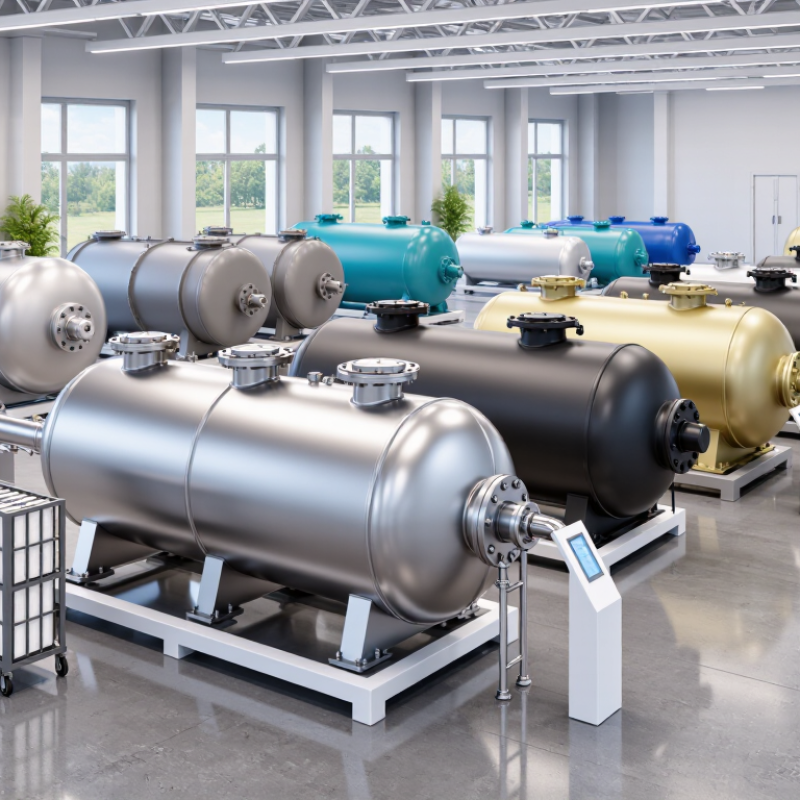
China’s industrial supply chain uses several oil separator types, each suited to different operating conditions. Centrifugal separators remove larger oil droplets from compressed air and process gas. Coalescing separators capture finer mist through layered filter media. Vane separators are common in compressors, vacuum systems, and rotating equipment. Oil-water separators support machining plants, vehicle maintenance sites, and wastewater treatment rooms.
In petrochemical plants, high-efficiency mist eliminators protect downstream equipment and reduce oil carryover. Steel mills and power facilities often require separators that tolerate heat, dust, and continuous operation. Food-processing factories need cleanable designs and carefully selected materials. Chinese manufacturers typically offer different flow capacities, pressure ratings, drain systems, and replacement elements. Buyers should check test data, sealing quality, service access, and spare-part availability. A low purchase price may become expensive after repeated filter changes. No separator fits every workshop. That mistake is still common.
Tips: Record air flow, oil viscosity, temperature, pressure, and contamination levels before choosing. Ask for documented separation efficiency under similar conditions. Inspect the drain valve and housing welds, not only the filter element. Keep a maintenance log with pressure-drop readings. If readings rise too quickly, the issue may involve poor pre-filtration, incorrect sizing, or unstable operating conditions. Supplier claims deserve verification through samples, site trials, and clear technical documentation.
China Top 10 Oil Separator Manufacturers?
A credible ranking should begin with engineering evidence, not factory size. API Recommended Practice 421 provides guidance for oil-water separator design, including retention, flow distribution, and sludge handling. It is not a product certification. Therefore, manufacturers should show calculations, drawings, and test results against stated flow rates. ISO 9001 also matters. The ISO Survey 2022 recorded more than 1.2 million ISO 9001 certificates worldwide, showing its broad value as a quality-management benchmark. It does not prove separation efficiency.
Capacity should be compared in cubic metres per hour, with influent oil concentration and temperature clearly stated. Efficiency claims need laboratory or site data, preferably using recognised test methods. A reported 95% removal rate means little without particle size, oil density, and sampling details. Small details matter. They often change the result.
Export performance can add market credibility. UN Comtrade data under HS 8421.21 can indicate China’s overseas shipments of water-treatment equipment, but this code includes more than oil separators. Rankings should therefore combine customs trends with verified separator references, delivery records, and after-sales capability. A high export value is not proof of better engineering. My ranking would assign separate scores for API 421 alignment, ISO 9001 systems, practical capacity, tested efficiency, and three-year export consistency. The method remains imperfect, because public data rarely separates oil separators from related equipment.
| Rank | Anonymous Supplier Profile | API RP 421 Alignment | ISO 9001 Status | Production Capacity | Oil–Water Separation Efficiency | Export Data Transparency | Evidence-Based Assessment |
|---|---|---|---|---|---|---|---|
| 1 | Supplier Profile 01 | Documentation required API RP 421 is a recommended practice, not a product certification. |
Certificate not publicly verified | Project-specific Capacity should be stated in m³/h and supported by production records. |
Test-condition dependent Efficiency must identify influent oil concentration, droplet size, temperature, and flow rate. |
Not attributable from public data | Requires valid certificates, drawings, test reports, and shipment evidence before final ranking. |
| 2 | Supplier Profile 02 | Documentation required Review separator sizing, retention time, coalescing design, and sludge-removal provisions. |
Certificate not publicly verified | Project-specific Published capacity without operating conditions is not directly comparable. |
Test-condition dependent A single efficiency percentage cannot represent every wastewater application. |
Not publicly disclosed | Commercial claims should be checked against independent performance documentation. |
| 3 | Supplier Profile 03 | Documentation required API RP 421 alignment should be assessed against the actual design package. |
Certificate not publicly verified | Project-specific Compare nominal, peak, and continuous operating flow separately. |
Test-condition dependent Require laboratory or field test conditions and sampling procedures. |
Customs verification required | Comparable ranking is not possible without standardized technical and commercial evidence. |
| 4 | Supplier Profile 04 | Documentation required Confirm design basis, hydraulic loading, and outlet-quality assumptions. |
Certificate not publicly verified | Project-specific Factory capacity and installed treatment capacity are different measures. |
Test-condition dependent Performance varies with oil type, emulsification, solids, and temperature. |
Not publicly disclosed | Supplier identity and shipment records should be validated independently. |
| 5 | Supplier Profile 05 | Documentation required Review whether the design applies the relevant separator principles appropriately. |
Certificate not publicly verified | Project-specific Capacity should include tank dimensions, materials, and operating configuration. |
Test-condition dependent Clarify whether the result refers to free oil, dispersed oil, or total hydrocarbons. |
Customs verification required | Use verified records rather than unsupported “top manufacturer” claims. |
| 6 | Supplier Profile 06 | Documentation required Check hydraulic calculations and equipment specifications. |
Certificate not publicly verified | Project-specific Request annual output only when the measurement basis is clearly defined. |
Test-condition dependent Ask for inlet and outlet analytical results from a defined test protocol. |
Not publicly disclosed | Evidence completeness should be scored separately from technical performance. |
| 7 | Supplier Profile 07 | Documentation required API RP 421 should not be presented as an ISO or regulatory certificate. |
Certificate not publicly verified | Project-specific Separate standard equipment range from customized engineering capability. |
Test-condition dependent Efficiency data must include analytical method and detection limit. |
Not publicly disclosed | Independent confirmation is required for any claimed export volume. |
| 8 | Supplier Profile 08 | Documentation required Assess conformance through drawings, calculations, and operating manuals. |
Certificate not publicly verified | Project-specific Nominal flow alone does not establish treatment performance. |
Test-condition dependent Oil removal results should be linked to a specified influent profile. |
Customs verification required | Do not infer export scale from website language or project photographs. |
| 9 | Supplier Profile 09 | Documentation required Confirm design assumptions for free-phase oil and suspended solids. |
Certificate not publicly verified | Project-specific Capacity figures should distinguish design flow from tested flow. |
Test-condition dependent Reported efficiency should specify whether it is average or guaranteed. |
Not publicly disclosed | Final supplier ranking should be revised when verifiable records become available. |
| 10 | Supplier Profile 10 | Documentation required Verify the complete technical file before treating alignment as established. |
Certificate not publicly verified | Project-specific Request audited production information or documented delivery history. |
Test-condition dependent Require reproducible test data rather than an unqualified percentage. |
Not publicly disclosed | Publicly available information is insufficient to substantiate a factual manufacturer ranking. |
China’s top ten oil separator manufacturers are best compared by technology and market focus, not by factory size alone. Some specialize in coalescing separators for compressed-air systems, while others build centrifugal units for machining fluids and hydraulic equipment. Several focus on vacuum pumps, refrigeration systems, marine engines, or oil mist collection. Their designs may include stainless-steel housings, replaceable filter elements, automatic drains, and differential-pressure indicators.
In practical sourcing, experienced buyers examine separation efficiency, pressure loss, service intervals, and actual flow capacity. A separator rated at 1,000 cubic meters per hour may perform poorly after oil viscosity changes or filter loading. Leading manufacturers usually provide test data, material specifications, dimensional drawings, and sample evaluations. Their strongest market focus often appears in their application records. Automotive plants need stable mist control. Food-processing facilities may require cleaner materials and easier maintenance. Heavy industry may prioritize impact resistance and continuous operation.
Tips: Ask for a sample test using your real oil, temperature, and airflow. Check the replacement element price, not only the initial quotation. Request pressure-drop readings before and after loading. A polished brochure is not proof of field reliability. I would also inspect drain valves and seals closely; small components often cause the largest maintenance problems. Rankings can change as technology improves, so treat any top-ten list as a starting point, not a permanent verdict.
This non-company-specific index compares the main technology and market-focus areas commonly associated with Chinese oil-separator manufacturing. The scores represent relative industry emphasis on a 0–100 scale, not company revenue or market share.
Performance should guide any comparison of China’s top ten oil separator manufacturers. Flow rate shows how much air or wastewater the unit can handle continuously. Pressure drop reveals the energy cost across the separator. A high flow rate means little if the pressure drop becomes excessive. Oil removal efficiency must reach at least 95% under clearly stated test conditions. Check inlet oil concentration, temperature, viscosity, and particle size. These details can change results significantly.
In practical testing, measure pressure before and after the separator at several flow points. Record readings after the system stabilizes, not immediately after startup. A reliable manufacturer should provide test methods, sample data, and maintenance intervals. Inspectors should also verify whether the claimed 95% removal applies to free oil, emulsified oil, or both. These are different challenges. Some published figures may look precise but remain difficult to reproduce. That deserves careful review.
Tips: Compare every model at the same flow rate. Ask for pressure-drop curves, not one reading. Request independent laboratory results when possible. Check drain performance during heavy oil loading. A separator may perform well in a clean test, yet struggle in a dirty workshop. Field conditions matter. During evaluation, leave room for uncertainty and document every assumption.
China’s top oil separator manufacturers should be judged by compliance evidence, not attractive brochures. For projects discharging in China, GB 8978 may require oil concentrations at or below 5 mg/L, depending on the applicable category and permit. Confirm the exact limit with the local environmental authority. A separator’s rated capacity is not enough. Ask for influent conditions, retention time, test methods, and treated-water reports.
CE marking matters when equipment enters the European Economic Area. It shows conformity with relevant European requirements, but it does not prove that the separator achieves 5 mg/L. ISO 14001 reflects an environmental management system, not automatic product quality. During supplier reviews, inspect factory testing, material certificates, welding records, maintenance instructions, and spare-parts support. Small details matter. A missing sampling port can make compliance verification difficult.
Tips: Request a witnessed performance test using realistic oil loads. Check whether the report identifies temperature, flow rate, oil type, and sampling location. Compare at least ten qualified manufacturers using the same checklist. Certificates can look convincing, yet old or unrelated documents may mislead buyers. I would also question unusually high removal claims without independent evidence. Real wastewater fluctuates, and a separator designed only for clean laboratory water may fail during a storm event or production surge. Keep these risks visible in the purchase specification.
Centrifugal separators remove larger oil droplets from compressed air and process gas. Coalescing models capture finer oil mist. Vane separators suit compressors, vacuum systems, and rotating equipment. Oil-water separators treat wastewater from machining and maintenance areas.
Record airflow, oil viscosity, temperature, pressure, and contamination levels first. Match these conditions with documented capacity and separation results. One separator cannot suit every workshop. That assumption causes expensive mistakes.
Compare flow capacity, pressure rating, drain design, sealing quality, and replacement elements. Check housing welds and service access. Spare parts matter. A low purchase price may increase costs through frequent filter changes.
The report should identify flow rate, temperature, oil type, oil concentration, and sampling location. It should also state the test method and particle size. A claimed removal rate means little without these details. I would still verify it with samples or a site trial.
No. A quality certificate shows process controls, not guaranteed separation efficiency. An environmental certificate shows management practices, not automatic product quality. Product tests and realistic operating data remain necessary.
Inspect the drain valve, housing welds, sealing surfaces, and sampling ports. Review material certificates, welding records, and maintenance instructions. A missing sampling port can make compliance checks difficult. Brochures are not enough.
Keep a maintenance log with pressure-drop readings and replacement dates. A rapid pressure increase may indicate poor pre-filtration or incorrect sizing. Unstable operation can also cause problems. The diagnosis may not be obvious.
Customs categories may include several types of water-treatment equipment. Export value alone does not prove better engineering. Compare shipment records with separator references, delivery history, and after-sales support. Public data remains imperfect.
This article presents a practical overview of China’s top 10 oil separator manufacturers, organized by technology, production capacity, application focus, and international market readiness. It explains how different oil separator types support industrial wastewater treatment, process water recovery, machinery protection, and environmental management across China’s industrial supply chain. The ranking framework considers API 421 design principles, ISO 9001 quality systems, manufacturing capacity, separation efficiency, export experience, and after-sales support, while keeping the comparison independent of individual brand names.
The article also compares typical performance indicators, including flow rate, pressure drop, maintenance requirements, and oil removal efficiency of at least 95%. It highlights the importance of selecting equipment capable of supporting the GB 8978 oil limit of 5 mg/L, alongside relevant CE and ISO 14001 considerations. By reviewing Separation Of Oil technologies and compliance factors together, buyers can make more informed decisions based on operating conditions, environmental targets, lifecycle cost, and long-term reliability.
