What happens when fuel leaves a reservoir and reaches a kitchen, factory, or airport? The Oil And Gas Industry connects those points through a complex energy system. It explores geological formations, drills wells, produces crude oil and natural gas, and transports them. Those materials move through pipelines, tankers, railways, and trucks. Refineries convert crude into fuels and other products, while gas-processing plants remove impurities and separate useful components. These products support transportation, heating, electricity generation, manufacturing, and many everyday materials.
Fatih Birol, Executive Director of the International Energy Agency, has called energy “the lifeblood of modern societies.” His observation captures the industry's reach, but not its full challenge. Each barrel begins with uncertainty. Geologists interpret seismic images, engineers manage pressure, and operators monitor equipment under heat, vibration, and changing weather. Safety systems, maintenance records, emissions controls, and emergency planning shape responsible operations. Production is never just a matter of turning a valve.
This overview follows the industry's upstream, midstream, and downstream segments. It explains how technology, workers, markets, investment, and public policy interact. It also considers methane emissions, carbon intensity, spills, water use, and community impacts. These issues cannot be treated as footnotes. Some explanations will simplify a complicated industry, and that limitation deserves honesty. Oil and gas remain important, yet their role is increasingly questioned by renewable energy, efficiency improvements, and climate commitments. Understanding the system requires practical detail and critical judgment. Look beyond the pump. Ask what happens before and after it.
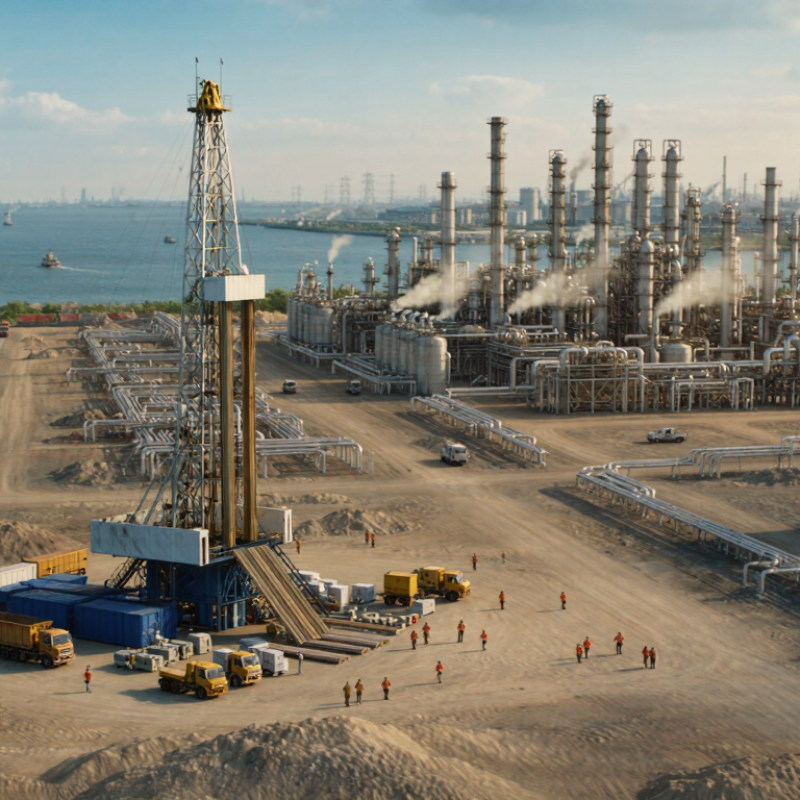
What Is the Oil and Gas Industry and How Does It Work?
The oil and gas industry covers exploration, production, processing, transport, and sales. Geologists study rock formations before companies drill wells. Production then brings crude oil and natural gas to the surface. Gathering systems move these resources to processing facilities. Refineries turn crude oil into fuels, lubricants, and chemical feedstocks. Gas plants remove water and impurities. Pipelines, tankers, and storage terminals connect producers with consumers.
Its scope reaches far beyond fuel stations. Oil still supplied about 31% of global energy consumption in 2023, according to the Energy Institute’s Statistical Review of World Energy 2024. Natural gas added roughly 23%. These figures show the sector’s continuing role in electricity, heating, transport, manufacturing, and fertilizer production. The International Energy Agency expects global oil demand to approach 105 million barrels per day by 2029. Demand growth may slow, but the system remains deeply connected to daily life. Forecasts can miss political shocks, technology changes, and weather extremes. That uncertainty deserves more attention.
Tips: Track both production and demand data. Check whether a report measures primary energy, final consumption, or trade volumes. A pipeline may appear efficient, yet maintenance, methane leakage, and regional access can change its real impact. Look for the report date, measurement unit, and geographic coverage. Small details matter.
Geological exploration begins with a question: where could hydrocarbons have formed, moved, and remained trapped? Geoscientists study sedimentary basins, source rocks, migration pathways, and sealing formations. Seismic surveys create underground images using controlled sound waves. Gravity and magnetic data add broader geological clues. These methods do not reveal oil directly. They reveal probability.
A basin model may show organic-rich shale buried deeply enough for heat to generate hydrocarbons. Engineers then compare seismic structures with nearby well logs and rock samples. A promising target still carries serious uncertainty. Faults may leak. Reservoir pores may be tight. Water may dominate the structure. Exploration wells test these assumptions, often reaching several kilometres below the surface. One sample can revise an entire geological model.
The Energy Institute’s Statistical Review of World Energy 2024 places global proved oil reserves above 1.5 trillion barrels at the end of 2023. It reports roughly 200 trillion cubic metres of proved natural gas reserves worldwide. These figures describe known, economically recoverable resources, not every hidden accumulation. The U.S. Geological Survey also separates technically recoverable resources from proved reserves, highlighting why estimates change as evidence improves. Discovery is rarely a single dramatic moment. It is a chain of measurements, interpretations, and difficult corrections. Sometimes, the model is wrong.
The oil and gas industry turns underground geology into usable energy. Drilling begins after seismic surveys identify promising rock structures. Engineers then select a well path, estimate pressure, and design drilling fluids. A drilling rig cuts through rock in stages. Steel casing and cement stabilize the wellbore. Small errors can create expensive delays.
Well development continues after reaching the target formation. Completion crews install production tubing and carefully open flow paths. In some reservoirs, horizontal wells contact more rock and improve recovery. Pumps may support production when natural pressure declines. The International Energy Agency estimated global upstream oil and gas investment at about 570 billion dollars in 2024. Its Oil 2024 report also projected oil demand near 103 million barrels per day. These figures show the sector’s scale, but not every project succeeds. Rock quality, water handling, and changing pressure can weaken original forecasts.
Tips: Check well logs against core samples, not assumptions. Track pressure, vibration, and fluid returns continuously. Use independent safety reviews before major well changes. The Society of Petroleum Engineers emphasizes disciplined well planning and barrier management. Field experience still matters. A model can be technically correct and operationally incomplete. Clear records, conservative decisions, and regular equipment testing reduce preventable risk. Geological uncertainty never disappears. It only becomes better managed.
Oil and Gas Processing, Refining, and Transporting Hydrocarbon Products
Hydrocarbon production does not end at the wellhead. Crude oil first moves through gathering lines, where separators remove water, gas, and sediment. Processing plants then stabilize the stream for safer handling. Natural gas may pass through dehydration and fractionation units, producing methane, ethane, propane, and butanes.
Refineries heat crude in tall distillation columns. Lighter fractions rise, while heavier materials settle near the bottom. Further units use cracking, reforming, and hydrotreating to produce fuels and chemical feedstocks. Sulfur removal matters because fuel specifications and air-quality rules are increasingly strict. The Energy Institute’s Statistical Review 2024 reported global oil consumption near 102 million barrels per day in 2023. That volume requires constant coordination between processing capacity, storage, and demand.
Transport systems connect each stage. Pipelines move large volumes continuously, while tankers carry crude and refined products across oceans. Rail and road tankers serve smaller or less connected markets. At terminals, operators measure temperature, density, pressure, and water content before transferring cargo. Small errors can become expensive. The International Energy Agency has repeatedly highlighted refining bottlenecks as a source of regional price pressure. A clean flow diagram can hide reality: equipment ages, weather interrupts shipping, and quality varies between fields. Some efficiency claims also deserve scrutiny, especially when they ignore methane leakage, energy use, or maintenance delays. Reliable operations depend on monitoring, conservative design, and workers who notice unusual sounds before instruments confirm a problem.
What Is the Oil and Gas Industry and How Does It Work?
The oil and gas industry connects underground resources with homes, factories, transport, and power systems. Exploration teams study seismic data before drilling wells, while engineers assess pressure, rock quality, and production risks. Markets then price crude oil and natural gas through contracts, storage levels, transport capacity, and regional demand. Prices can change quickly. A delayed tanker or a cold winter may affect costs within days.
Regulation shapes every stage, from leasing and drilling permits to worker safety and pipeline inspections. Public agencies may require water testing, emissions reporting, emergency plans, and site restoration. Technology improves these controls through remote sensors, automated valves, digital mapping, and methane detection. Yet technology is not a complete solution. A sensor can miss a leak, and a strong rule can fail when enforcement is weak. That uncomfortable gap deserves attention.
Environmental impacts begin before fuel reaches consumers. Drilling can disturb habitats, use substantial water, and create air emissions. Natural gas production may release methane, a powerful greenhouse gas, if equipment leaks. Oil transport also carries spill risks, even with layered safeguards. Lower-carbon operations, electrified equipment, carbon capture, and renewable energy can reduce some impacts. They cannot erase them. Careful measurement matters more than optimistic claims. Communities living near wells often notice noise, traffic, or water concerns before distant analysts do.
Global oil demand rose from approximately 92.8 million barrels per day in 2014 to 101.7 million barrels per day in 2023, with a sharp decline in 2020 during the COVID-19 pandemic. Oil and gas markets are shaped by supply and demand, government regulation, technological development, and environmental concerns such as greenhouse-gas emissions and methane leakage. Data are rounded historical estimates from the Energy Institute Statistical Review of World Energy 2024.
It covers exploration, production, processing, transport, storage, and sales. It connects underground resources with homes, factories, vehicles, and power systems.
Separators remove water, gas, and sediment from crude oil. Gas plants remove water and impurities before separating methane, ethane, propane, and butanes. A rough flow is not reality.
Distillation columns separate crude by boiling point. Cracking, reforming, and hydrotreating create fuels, lubricants, and chemical feedstocks. Sulfur removal supports cleaner fuel use.
Pipelines move large volumes continuously. Tankers cross oceans, while rail and road vehicles serve smaller or less connected markets. Weather can interrupt shipping suddenly.
Prices respond to demand, storage, contracts, transport capacity, and supply disruptions. A delayed tanker or cold winter can raise regional costs within days.
Regulations can cover drilling permits, worker safety, water testing, emissions, pipeline inspections, and site restoration. Strong rules still need consistent enforcement.
Drilling may disturb habitats, use water, and release air emissions. Leaking equipment can release methane, while transport creates spill risks. Safeguards reduce danger, but cannot remove it.
Sensors, automated valves, digital mapping, and leak detection can improve monitoring. However, sensors may miss problems, and maintenance can be delayed. Technology helps, but it is not a complete answer.
Oil supplied about 31% of global energy consumption in 2023, while natural gas supplied roughly 23%. Their influence remains large, although forecasts can miss political, technological, and weather changes.
The Oil And Gas Industry is a major part of the global energy system, supplying fuels and raw materials used for transportation, electricity, heating, manufacturing, and many everyday products. Its work begins with geological exploration, where specialists study rock formations and underground structures to identify possible oil and natural gas reserves. If a discovery appears commercially viable, companies plan and construct wells, manage drilling operations, and use suitable technologies to extract resources safely and efficiently.
After extraction, crude oil and natural gas are processed to remove impurities and prepare them for different uses. Crude oil may be refined into fuels and other products, while natural gas can be treated, compressed, or converted for delivery. Pipelines, ships, railways, and trucks connect production areas with processing facilities and markets. The industry is influenced by energy prices, government regulation, technological development, and international demand. At the same time, it faces environmental challenges, including emissions, habitat disturbance, water management, and the need to improve operational safety and support a lower-carbon energy future.
