Oil prices rarely rise for one simple reason. A sudden Oil Increase can begin with reduced production, tighter inventories, or stronger demand from expanding economies. It may then spread through freight rates, refinery costs, plastics, packaging, and electricity generation. Global buyers need to understand these connections before approving new contracts or adjusting procurement budgets.
Brent and West Texas Intermediate prices provide useful market signals, but they do not tell the whole story. Production decisions from OPEC+, supply disruptions, weather damage, sanctions, exchange-rate movements, and shipping risks can change regional costs quickly. A barrel priced in dollars may become even more expensive when a buyer’s local currency weakens. Watch the details.
Experienced purchasing teams compare benchmark prices with supplier premiums, transport charges, insurance, and delivery terms. They also examine inventory reports and verified information from recognized energy agencies. However, no forecast is perfect. The market can react emotionally, and even experienced analysts revise their assumptions. That uncertainty deserves attention, not confident promises. A practical buyer should test several price scenarios, review contract adjustment clauses, and maintain communication with suppliers before costs move again. Small details matter, such as a refinery outage in one region or a delayed tanker near a busy port. This guide explains the main forces behind rising oil prices and shows how global buyers can respond with clearer evidence, realistic planning, and disciplined risk management.
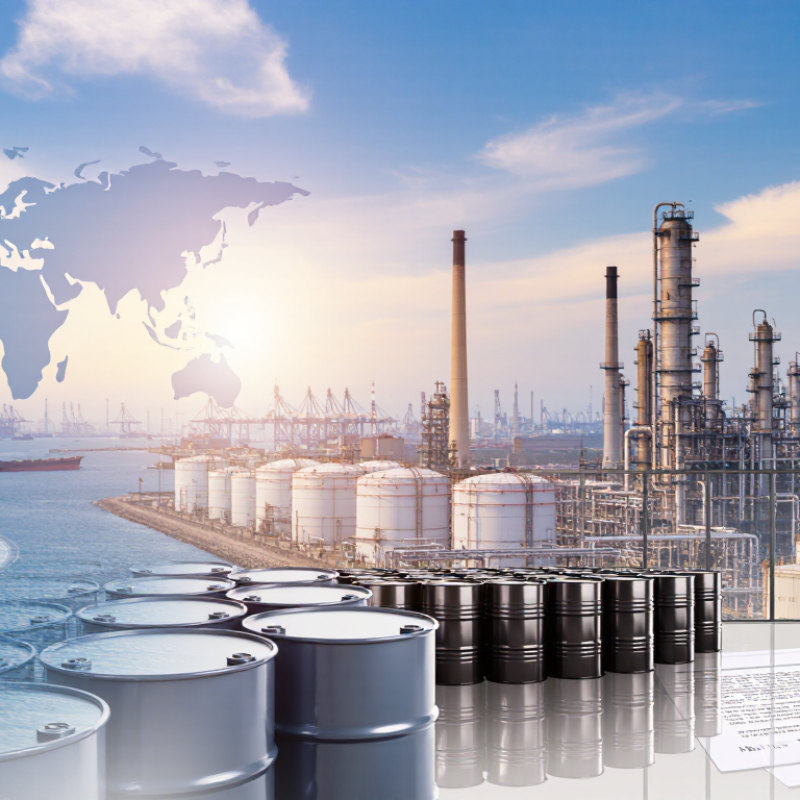
What Determines Global Oil Prices?
Top Reasons for Oil Price Increase Global Buyers Should Know
What Determines Global Oil Prices?
Global oil prices reflect a moving balance between supply, demand, inventories, and market expectations. Demand usually rises with transport activity, industrial production, and seasonal travel. The International Energy Agency’s Oil 2024 report projects global demand will reach about 105.4 million barrels per day by 2029.
Supply disruptions can move prices within hours. Storms, conflicts, export restrictions, or maintenance may remove barrels from the market. Spare production capacity also matters. When available capacity is limited, buyers often pay more for immediate delivery.
Commercial inventories provide another important signal. The U.S. Energy Information Administration reports that falling crude stocks can support higher prices, especially when refinery activity remains strong. Currency movements matter too. Oil is commonly traded in U.S. dollars, so exchange-rate changes affect purchasing costs for international buyers.
Expectations can be powerful. Futures traders may price in shortages before physical supply changes. OPEC’s Monthly Oil Market Report has repeatedly shown how demand forecasts can shift with economic growth assumptions. Forecasts are not flawless. That matters.
Tips: Track inventory reports, refinery utilization, freight rates, and currency trends together. Compare official data with supplier quotes. A sudden price jump may reflect fear, not a lasting shortage. Build flexible purchasing windows, but avoid relying on one forecast.
How Supply Disruptions Push Oil Prices Higher
When oil supply is interrupted, buyers compete for fewer prompt barrels. That imbalance can lift benchmark prices within hours. A damaged export terminal, storm-hit platform, or closed pipeline may remove cargoes from the market. Traders then reassess nearby supply, shipping costs, and inventory levels. The physical shortage may be temporary, but fear can move prices faster. Small disruptions matter when spare production capacity is limited.
From a buyer’s perspective, the chain reaction is practical. Refineries may pay more for replacement crude, while shipowners charge for longer routes or delayed loading. Importers also face currency pressure, insurance changes, and higher storage expenses. Those costs can reach manufacturers and consumers through fuel, transport, and packaging prices. A weekly inventory report often provides evidence, but it does not explain every movement. Markets price expectations, not only barrels already missing.
Reliable analysis needs several checks. Compare production data with port schedules, refinery outages, weather reports, and regional stockpiles. Do not treat one headline as proof of a lasting shortage. Some disruptions fade quickly; others expose weak infrastructure and create months of tight supply. Yet the picture is rarely clean. Forecasts can be wrong, especially when demand changes at the same time. Global buyers should review contract flexibility, delivery windows, and backup suppliers before disruption becomes a purchasing emergency.
Why Rising Demand Increases Pressure on Oil Markets
Rising demand is a direct source of pressure on oil markets. When factories, airlines, trucks, and households consume more fuel, refiners compete for additional crude barrels. Supply cannot always respond quickly. New projects require years, while existing fields often decline gradually. Even a small shortage can lift prices sharply.
The International Energy Agency’s Oil Market Report estimated global oil demand growth at about 1 million barrels per day in 2024. Its 2025 outlook also identified continued demand growth, although at a slower pace. OPEC’s 2024 market report offered a much higher estimate, near 2.2 million barrels per day. This disagreement matters. Forecasts are not flawless, and buyers should test assumptions against real orders, freight activity, and refinery utilization.
Pressure becomes visible in practical details. A refinery running near full capacity may pay more for suitable crude grades. A delayed tanker can tighten regional availability within days. Lower commercial inventories can amplify that reaction. The U.S. Energy Information Administration has repeatedly linked inventory changes with short-term price volatility. Buyers should therefore track demand indicators, refinery outages, stock levels, and shipping costs together. One number is rarely enough. Even careful procurement plans can fail when weather, production disruptions, or unexpected consumption arrive at the same time.
The Role of OPEC+ Decisions in Oil Price Growth
Top Reasons for Oil Price Increase Global Buyers Should Know
The Role of OPEC+ Decisions in Oil Price Growth
OPEC+ decisions can strongly influence oil prices by changing expected supply. When the group lowers production targets, traders often anticipate fewer barrels in future months. Prices may rise before physical supply actually tightens. Markets react quickly.
The effect depends on compliance. Some members may produce below their limits, while others may struggle to reduce output. Official statements provide useful guidance, but buyers should compare them with export schedules, refinery demand, and inventory reports. A supply cut matters more when global stockpiles are already falling. Spare capacity also shapes the market’s response. If available capacity is limited, even a small disruption can create sharper price movements.
Oil purchasing teams should examine both the announcement and its practical results. In contract reviews, I would check delivery premiums, freight costs, currency changes, and regional crude differences. These details can reveal pressure that a headline price hides. Futures markets may also reflect fear rather than confirmed shortages. That assumption can fail. Demand can weaken, or production can recover faster than expected. Compliance data is sometimes delayed, incomplete, or disputed, which makes confident forecasts difficult. A careful buyer should use several independent data sources and test different price scenarios before changing procurement plans.
Top Reasons for Oil Price Increase Global Buyers Should Know - The Role of OPEC+ Decisions in Oil Price Growth
| Period |
OPEC+ Decision or Supply Event |
Stated Supply Change
(million barrels/day) |
Main Price-Support Mechanism |
Brent Monthly Average
(USD/barrel) |
Observed Price Movement |
Important Context for Global Buyers |
| April–May 2020 |
OPEC+ agreed to its largest coordinated production reduction, initially targeting a cut of approximately 9.7 million barrels per day in May and June. |
−9.7 |
Reduced excess supply and helped stabilize a market affected by a severe demand shock. |
18.38 → 29.38 |
+59.8% |
The increase also reflected recovering mobility and improving market confidence; production cuts alone did not create the entire price movement. |
| January 2021 |
OPEC+ maintained broad production restraint, while one major member announced an additional voluntary reduction of about 1 million barrels per day for February and March. |
Approx. −1.0 voluntary |
Lower available supply supported market rebalancing as fuel demand began to recover. |
49.99 → 54.77 |
+9.6% |
Inventory expectations and the gradual reopening of economies reinforced the effect of the voluntary cut. |
| November 2022 |
OPEC+ announced a production adjustment of approximately 2 million barrels per day from November, although the actual reduction was smaller in several months because some members were already producing below target. |
−2.0 target |
The decision established a price-support signal and limited the risk of a rapid supply surplus. |
93.33 → 91.42 |
−2.0% |
This example shows that an announced cut does not guarantee higher prices when recession concerns, currency movements, and demand uncertainty dominate. |
| April 2023 |
Several OPEC+ members announced additional voluntary reductions totaling approximately 1.16 million barrels per day, beginning in May. |
−1.16 voluntary |
The surprise announcement reduced expected supply and encouraged traders to price in tighter balances. |
78.43 → 84.64 |
+7.9% |
The price response occurred before the full physical effect of the cuts, demonstrating the importance of expectations and market sentiment. |
| July 2023 |
Voluntary reductions were extended and deepened by key participating members, including an additional temporary reduction of about 1 million barrels per day by one major producer. |
Approx. −1.0 additional |
Lower supply availability and falling visible inventories supported a stronger near-term price structure. |
74.98 → 80.11 |
+6.8% |
For buyers, temporary voluntary cuts can create short-term procurement risk even when long-term supply capacity remains adequate. |
| March–April 2024 |
OPEC+ extended voluntary supply reductions through the second quarter of 2024, delaying the planned return of some barrels to the market. |
Approx. −2.2 voluntary |
The extension reduced the expected pace of supply growth and supported tighter second-quarter balances. |
83.48 → 89.04 |
+6.7% |
Geopolitical risk and stronger seasonal demand also contributed, so the increase should not be attributed exclusively to the production decision. |
| June 2024 |
OPEC+ extended the main production-cut framework into 2025 while planning a gradual return of some voluntary cuts from the fourth quarter of 2024. |
Mixed: cuts extended, unwinding planned |
The long-term extension provided a supply floor, but the planned unwinding reduced the immediate bullish impact. |
83.00 → 82.54 |
−0.6% |
A credible supply policy can limit downside without producing an immediate price increase when demand growth is uncertain. |
Data notes:
Brent figures are monthly average prices in nominal USD per barrel and are rounded to two decimals. Percentage changes compare the first and last monthly averages shown in each row. Production figures represent announced targets or voluntary reductions; actual market supply changes can differ because of compliance levels, capacity constraints, sanctions, outages, demand changes, inventory movements, and geopolitical risk.
Reference basis:
Historical monthly crude-price series from the U.S. Energy Information Administration and production-policy announcements reported in OPEC Monthly Oil Market Reports and official OPEC+ meeting communications.
How Geopolitical and Economic Factors Shape Oil Costs
Oil prices rarely rise for one reason. Geopolitical tension can quickly change how crude moves across borders. A conflict near major production fields may threaten supply expectations. Even without physical damage, traders often price in possible delays.
Shipping routes matter too. If vessels avoid a risky passage, journeys become longer and fuel costs increase. Insurance premiums may also rise. These extra expenses can reach refineries, importers, and manufacturers. A small delay at a busy port can create visible pressure in regional markets.
Economic conditions shape the second half of the story. Strong industrial growth increases demand for diesel, jet fuel, and petrochemical feedstocks. Lower interest rates can support construction and transport activity. A weaker currency may make imported oil more expensive for local buyers. Commercial inventories provide useful evidence, but weekly figures can mislead when seasonal demand changes.
The market reacts to expectations.
For global buyers, reliable decisions require more than watching daily price charts. They should compare supply risks, shipping data, currency movements, and refinery capacity. Energy analysts often test several scenarios instead of trusting one forecast. Still, uncertainty remains. Political signals can change overnight, while economic data arrives slowly. That mismatch makes oil purchasing difficult, and even experienced teams can misjudge the next move.
Conclusion
Global oil prices are shaped by the balance between supply, demand, market expectations, and production costs. When production falls because of natural disasters, technical problems, transportation interruptions, or political instability, available supplies become tighter and prices may rise quickly. At the same time, stronger demand from transportation, manufacturing, and energy consumption can place additional pressure on oil markets, especially when inventories are already low. These conditions are key factors behind an Oil Increase.
Production decisions made by major oil-producing countries and their cooperation groups can also influence global supply and price trends. Changes in output targets may strengthen or ease market pressure depending on demand conditions. In addition, geopolitical tensions, trade restrictions, currency movements, inflation, economic growth, and fears of recession can all affect oil costs. Understanding these connected factors helps global buyers assess pricing risks, plan procurement more effectively, and respond to changing energy market conditions.

