
Produced Water In Oil And Gas is not a side issue. It is a daily operating challenge. A single well can send water carrying salts, oil droplets, treatment chemicals, and suspended solids toward the surface. Its chemistry can change between wells and across a field. That variability matters. John A. Veil, an environmental scientist whose work has examined produced-water management, describes it as “the largest volume waste stream associated with oil and gas production.” The scale makes careful treatment essential.
This 2026 overview examines solutions such as gravity separation, hydrocyclones, filtration, flotation, membrane processes, and selective desalination. Each has trade-offs. A compact system may suit a crowded offshore platform, while a land-based facility may have room for several treatment stages. Operators must consider water quality, flow rate, energy use, maintenance, and the intended reuse or disposal route. A clear sample bottle is not proof that every contaminant has been removed. That distinction is easy to miss. No treatment train is universal, and technology claims deserve scrutiny against site-specific data. Field performance can differ from a neat diagram. This guide compares practical options, explains where each may fit, and highlights questions buyers should ask before committing. Some uncertainty remains; responsible decisions begin by measuring it.
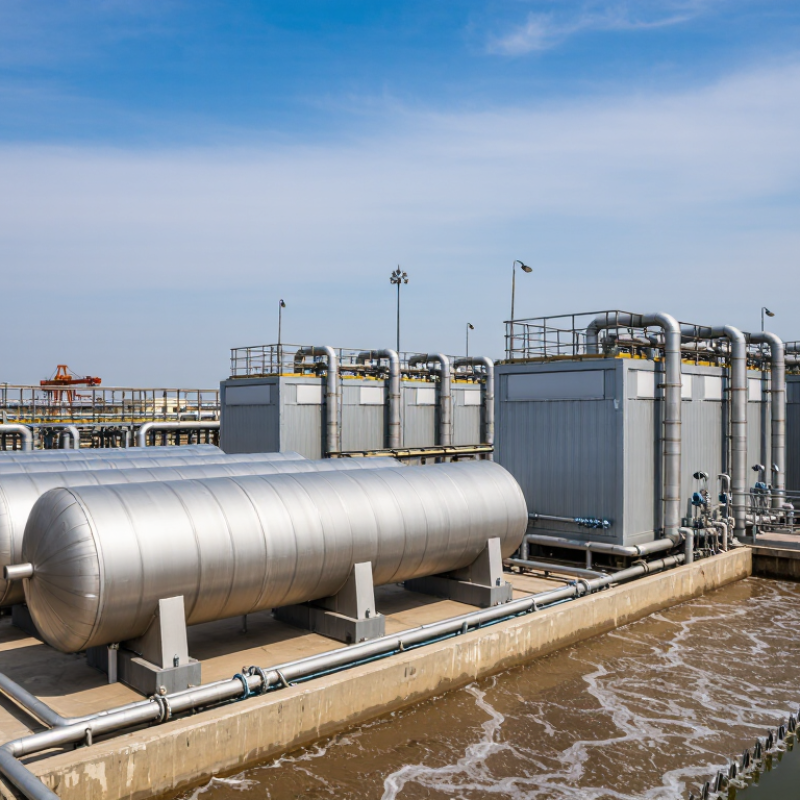
Produced water is the water brought to the surface alongside oil or natural gas during production. Some of it has spent millions of years in tiny spaces between underground rock grains. It may also include water injected into a reservoir to maintain pressure or help release hydrocarbons. In some operations, injected water returns soon after use and is called flowback. The categories can overlap.
It is not clean water. Produced water may contain dissolved salts, minerals, small amounts of oil, and naturally occurring compounds from the formation. Its appearance varies: one sample may be clear, while another looks cloudy or carries a faint oily sheen. Composition can change between wells, and even over a single well’s lifetime. It varies. The label sounds simple, but the mixture is not. That matters when operators assess what treatment is needed; a test from one site should not be assumed to represent another. Records of where the water came from, when it was sampled, and how production was occurring help make those measurements more useful. Without that context, even a precise lab result can tell an incomplete story.
| Topic | What It Is or Where It Comes From | Typical Water Characteristics | Treatment Solutions | Selection Notes |
|---|---|---|---|---|
| Produced water definition | Water brought to the surface during oil and gas production. It can include naturally occurring formation water, water injected during production, and smaller amounts of fluids used in well operations. | Composition varies by reservoir, well age, production method, and operating conditions. | Characterize the water first, then select a treatment train based on the intended destination: reinjection, reuse, or permitted discharge. | A single treatment process rarely addresses every contaminant or every reuse requirement. |
| Formation water | Water naturally present in the pore spaces of underground rock formations. It is produced with hydrocarbons when the reservoir is brought into production. | May contain dissolved salts, suspended solids, dispersed oil, dissolved organic compounds, and naturally occurring minerals. | Oil separation, solids removal, filtration, and—where required—desalination or targeted contaminant removal. | Laboratory analysis is needed because chemistry can differ substantially between fields and even between wells. |
| Injected water and operational fluids | Water injected for pressure support or other production purposes can return to the surface. Produced water may also contain residues from drilling, completion, or production operations. | May include treatment chemicals, corrosion products, scale-forming ions, or suspended material, depending on the operation. | Solids control, chemical treatment, oil removal, and compatibility testing before recycling or reinjection. | Check for scaling, corrosion, and incompatibility risks before mixing water from different sources. |
| Early well flowback | In some hydraulically fractured wells, water returning soon after stimulation is commonly described as flowback. As production continues, it may mix with formation water and be managed as produced water. | Composition changes over time; early returns can contain residual completion chemicals and suspended solids, while salinity may change as formation water contributes. | Equalization, solids removal, oil separation, and fit-for-purpose treatment before reuse or disposal. | Sample at different production stages; one sample may not represent the well’s changing water quality. |
| Salinity and dissolved minerals | Dissolved salts originate mainly from contact with subsurface formations and can also reflect injected-water chemistry. | Total dissolved solids range from relatively low-salinity water to more than 200,000 mg/L in some basins. | Reverse osmosis for suitable, well-pretreated feed; thermal distillation or evaporation for some high-salinity streams; crystallization when salt concentration or a zero-liquid-discharge objective requires it. | High salinity increases scaling and corrosion concerns. Membrane suitability depends on feed chemistry, pressure, recovery, and a viable concentrate-management plan. |
| Free and dispersed oil | Oil can enter the water as droplets during production and separation. Droplet size and stability depend on equipment, chemistry, and operating conditions. | Untreated oil concentrations vary widely and can range from tens to thousands of mg/L in some streams. | Gravity separation or coalescing for bulk free oil; hydrocyclones and induced- or dissolved-gas flotation for further removal; chemical demulsification where needed. | These processes primarily target oil droplets, not dissolved salts or all dissolved organic compounds. Performance should be verified at the required outlet quality. |
| Suspended solids | Solids may include formation fines, corrosion products, scale particles, and other carried-over material. | Particle concentration and size vary; solids can foul downstream membranes and interfere with reinjection. | Settling, hydrocyclone solids removal, cartridge or granular-media filtration, and other filtration selected for the particle-size range. | Monitor suspended solids and particle size; filtration selection should reflect the requirements of the next treatment step. |
| Dissolved organics and gases | Some produced waters contain dissolved hydrocarbons and naturally occurring gases; the specific compounds depend on the reservoir and process. | Potential constituents include BTEX compounds, volatile organics, or hydrogen sulfide in some streams. | Targeted air stripping with appropriate vapor controls, activated-carbon adsorption, or advanced oxidation may be used where water analysis and the treatment objective support them. | Use compound-specific testing and appropriate worker-safety and emissions controls. These methods do not replace bulk oil and solids removal. |
| Biodegradable organics | Organic compounds may come from formation fluids or operational chemicals. | Biodegradability and toxicity vary; high salinity or inhibitory compounds can limit biological-treatment performance. | Biological treatment can be considered for suitable streams, usually after oil and solids reduction and following treatability testing. | Assess salinity, temperature, toxicity, and the required effluent quality before selecting a biological process. |
| Common treatment train | A sequence of processes selected to meet a specific water-management objective. | Feed quality and target quality determine the required process stages. | Example sequence: equalization → oil-water separation → flotation → filtration → membrane or thermal treatment if needed → final quality verification. | Not every facility needs every step. Pilot testing and ongoing monitoring help confirm performance under actual operating conditions. |
| Final water destination | Common management routes include subsurface reinjection or disposal, reuse in suitable oilfield operations, and discharge where permitted. | Required water quality depends on the destination, applicable regulations, and operational compatibility. | Match treatment and monitoring to the destination; evaluate concentrate, sludge, and other residuals as part of the overall system. | Discharge limits and reuse criteria are site- and jurisdiction-specific; verify current permit and regulatory requirements. |
Note: The characteristics and example ranges shown are general; actual produced-water quality varies by basin, well, and production stage. Confirm design values with representative sampling and site-specific testing.
It is fluid brought to the surface during oil and gas production. Its appearance can be misleading. Clear water may still contain dissolved salts, trace metals, or tiny oil droplets.
Common concerns include oil, suspended solids, salts, metals, and residual treatment chemicals. Some water may contain naturally occurring radioactive materials. Measure them; do not assume.
High salinity can stress freshwater plants and aquatic life. Some metals and hydrocarbons may persist in sediment or affect water quality. The risk depends on exposure and handling.
Water often enters a tank or separator. Oil rises, and solids settle for removal. Skimming can collect floating oil. Small droplets may need flotation.
Water chemistry and flow differ between wells and production stages. Filters can capture fine particles; membranes may reduce salts when reuse requires it. No single treatment train fits every site.
High salinity may rule out some reuse options. Membranes can help, but they create a concentrated waste stream that still needs handling. That constraint deserves attention.
Track oil in water, conductivity, turbidity, and system pressure. Rising filter pressure may signal clogging. A visible sheen can also prompt a closer check.
One sample is only a snapshot. Production conditions and water quality can change over time. A hurried grab sample may miss that variation. It is worth checking again.
Produced Water In Oil And Gas is the water brought to the surface during oil and gas production, often alongside hydrocarbons. Its composition varies by source and may include dissolved salts, oil and grease, suspended solids, treatment chemicals, and naturally occurring minerals. If poorly managed, these contaminants can affect soil, water, and ecosystems, making careful treatment and monitoring essential.
Treatment typically combines steps such as separating free oil, removing particles, reducing dissolved contaminants, and polishing water for its intended destination. Leading approaches for 2026 may include improved filtration, membrane processes, flotation, adsorption, and systems designed to recover water for reuse. Selecting a solution means assessing water quality, flow rates, site conditions, operating costs, and the required treatment outcome. Regular maintenance, performance checks, and adaptable system design help operators manage changing water characteristics and support reliable, responsible water handling.
